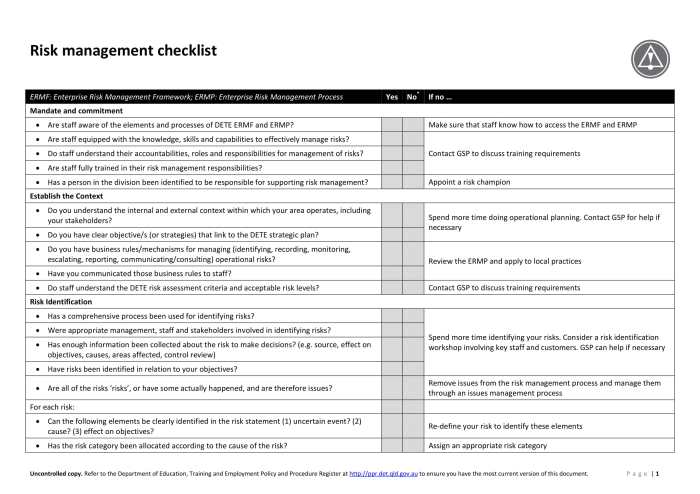
Embark on a journey through the world of risk assessment with our detailed guide on the Risk assessment checklist. Explore essential components, real-life examples, and tips for effective risk management.
Introduction to Risk Assessment Checklist

Risk assessment checklists are tools used to systematically identify, assess, and prioritize potential risks in a given situation or environment. These checklists provide a structured approach to evaluating hazards, vulnerabilities, and the likelihood of negative outcomes, helping organizations or individuals make informed decisions to mitigate or manage risks effectively.
Importance of Using a Checklist in Risk Assessment
Checklists play a crucial role in risk assessment by ensuring that all relevant factors are considered and no important details are overlooked. They help standardize the risk assessment process, making it more thorough, consistent, and reliable. By following a checklist, organizations can enhance their risk management practices and improve overall safety measures.
- Checklists help in identifying potential risks that may not be immediately apparent, leading to a more comprehensive risk assessment.
- They serve as a reminder to consider different aspects of a situation, ensuring a more holistic approach to risk evaluation.
- Checklists can be customized to specific industries or scenarios, making them versatile tools for various risk assessment needs.
Examples of Industries or Scenarios Where Risk Assessment Checklists are Commonly Used
Checklists are widely utilized across various industries and scenarios to assess and manage risks effectively. Some common examples include:
- Construction: Construction companies use checklists to evaluate potential hazards on job sites, such as falls, electrical hazards, and hazardous materials.
- Healthcare: Healthcare facilities utilize checklists to assess risks related to patient safety, infection control, and emergency preparedness.
- Manufacturing: Manufacturing plants rely on checklists to identify risks associated with machinery, chemicals, and ergonomic factors in the workplace.
Components of a Risk Assessment Checklist
Risk assessment checklists are essential tools for identifying and managing potential risks in various processes or activities. Here are some key components that should be included in a comprehensive risk assessment checklist:
Identification of Risks
- Clearly defined scope of the risk assessment
- List of potential risks based on past experiences, industry standards, or expert knowledge
- Inclusion of internal and external factors that may contribute to risks
- Categorization of risks based on their nature, such as financial, operational, strategic, or compliance-related risks
Risk Analysis and Evaluation
- Assessment of the likelihood of each risk occurring
- Evaluation of the potential impact or consequences of each risk
- Consideration of risk interdependencies and cascading effects
- Use of qualitative and quantitative methods for risk analysis
Risk Prioritization
- Ranking risks based on their severity, likelihood, and impact
- Assigning risk scores or ratings to prioritize risks for mitigation
- Focusing on high-risk areas that require immediate attention or intervention
- Regular review and updates of risk prioritization based on changing circumstances
Using a Risk Assessment Checklist
Conducting a risk assessment using a checklist is a systematic process that helps organizations identify, analyze, and evaluate potential risks to their operations. By following a step-by-step approach, businesses can effectively manage risks and make informed decisions to protect their assets and achieve their objectives.
Step-by-Step Process of Conducting a Risk Assessment using a Checklist
- Identify the scope and objectives of the risk assessment to focus on specific areas of concern.
- Gather relevant information such as past incidents, industry trends, and regulatory requirements.
- Use the risk assessment checklist to systematically identify potential risks and their potential impact.
- Assess the likelihood and severity of each risk to prioritize them based on their significance.
- Develop risk mitigation strategies to address high-priority risks and reduce their impact on the organization.
- Monitor and review the effectiveness of the risk management strategies implemented based on the checklist.
Tips for Effectively Utilizing a Checklist for Risk Assessment
- Customize the checklist to fit the specific needs and requirements of your organization.
- Involve key stakeholders in the risk assessment process to gain different perspectives and insights.
- Regularly update the checklist to reflect changes in the business environment and emerging risks.
- Ensure clear communication of the risk assessment results and actions to relevant stakeholders.
- Use a combination of qualitative and quantitative data to provide a comprehensive view of risks.
Real-Life Examples of Using a Risk Assessment Checklist
One example of how using a risk assessment checklist led to better risk management decisions is seen in the aviation industry. Airlines use comprehensive checklists to assess various risks associated with flight operations, maintenance, and safety protocols. By systematically evaluating risks and implementing preventive measures based on the checklist, airlines can enhance safety standards and prevent potential accidents.
Integrating Risk Management with Risk Assessment
When it comes to managing risks effectively, integrating risk management with risk assessment is crucial. Risk management involves identifying, assessing, and prioritizing risks, as well as implementing strategies to mitigate or eliminate them. On the other hand, risk assessment is the process of evaluating potential risks and their impacts on an organization.
Relationship between Risk Management and Risk Assessment
The relationship between risk management and risk assessment is symbiotic. Risk assessment provides the foundation for effective risk management by identifying potential risks and their likelihood of occurrence. This information is then used to develop risk management strategies that address these risks proactively.
Findings from a Risk Assessment Checklist Informing Risk Management Strategies
- Identifying high-priority risks: The findings from a risk assessment checklist help prioritize risks based on their potential impact and likelihood, allowing organizations to focus their resources on managing the most critical risks.
- Developing risk mitigation plans: By understanding the specific risks identified through a risk assessment checklist, organizations can develop tailored risk mitigation plans to address these risks effectively.
- Implementing controls: The results of a risk assessment checklist can inform the implementation of controls and safeguards to reduce the likelihood of risks materializing and minimize their impact if they occur.
Examples of Risk Management Techniques Influenced by the Results of a Risk Assessment Checklist
- Insurance coverage: After conducting a risk assessment using a checklist, organizations may choose to purchase insurance coverage for risks that cannot be fully mitigated through other means.
- Training and education programs: Based on the findings of a risk assessment checklist, organizations may invest in training and education programs to enhance employee knowledge and awareness of certain risks.
- Emergency response planning: The results of a risk assessment checklist can guide the development of emergency response plans that Artikel specific actions to be taken in the event of identified risks materializing.
Understanding Risk Tolerance
Risk tolerance is the level of risk that an organization is willing to accept in pursuit of its objectives. It is a crucial aspect of risk assessment as it helps determine the acceptable level of uncertainty that the organization can handle. Understanding risk tolerance is essential for making informed decisions and prioritizing risk management efforts effectively.
Factors Influencing Risk Tolerance
Factors that influence an organization’s risk tolerance include:
- The organization’s overall goals and objectives
- The industry in which the organization operates
- The organization’s financial position and resources
- The regulatory environment in which the organization functions
- The organization’s risk management culture and past experiences with risk
Strategies for Setting Risk Tolerance Levels
To evaluate and set appropriate risk tolerance levels within a risk assessment checklist, organizations can consider the following strategies:
- Engage key stakeholders in the risk assessment process to ensure alignment with organizational objectives and values.
- Utilize risk appetite statements to clearly define acceptable and unacceptable levels of risk.
- Conduct scenario analysis and stress testing to understand the potential impact of different risk scenarios on the organization.
- Regularly review and update risk tolerance levels based on changes in the internal and external environment.
- Integrate risk tolerance considerations into decision-making processes to ensure risks are managed within acceptable limits.
In conclusion, mastering the Risk assessment checklist is key to making informed risk management decisions. Stay ahead of potential risks and ensure a secure future for your organization.
Q&A
What is the purpose of a risk assessment checklist?
The purpose is to systematically identify, analyze, and evaluate potential risks to ensure effective risk management.
How can risks be prioritized within a checklist?
Risks can be prioritized based on factors such as severity, likelihood of occurrence, and potential impact on the organization.
What is risk tolerance in the context of risk assessment?
Risk tolerance refers to the level of risk that an organization is willing to accept in pursuit of its objectives, considering factors like financial stability and reputation.
How can findings from a risk assessment checklist inform risk management strategies?
Findings can help organizations identify areas of vulnerability, prioritize risk mitigation efforts, and develop proactive risk management plans.
What are some common industries or scenarios where risk assessment checklists are used?
Industries such as healthcare, construction, finance, and aviation often utilize risk assessment checklists to ensure safety, compliance, and operational efficiency.


