
With Risk management in project management at the forefront, this paragraph opens a window to an amazing start and intrigue, inviting readers to embark on a storytelling casual formal language style filled with unexpected twists and insights.
In the realm of project management, navigating risks is crucial for success. From assessing potential pitfalls to implementing effective strategies, the journey of risk management is both challenging and rewarding. Let’s delve into the intricacies of risk management in project management.
Risk Assessment
Conducting a thorough risk assessment in project management is crucial to identify potential risks that could impact the project’s success. By evaluating and analyzing risks early on, project managers can develop strategies to mitigate or eliminate these risks, ensuring a smoother project lifecycle.
Common Tools and Techniques for Risk Assessment
- SWOT Analysis: This tool helps in identifying the project’s Strengths, Weaknesses, Opportunities, and Threats, including potential risks.
- Probability and Impact Matrix: Evaluates the likelihood of a risk occurring and its potential impact on the project.
- Delphi Technique: Involves experts providing anonymous input on project risks to reach a consensus.
Importance of Early Risk Identification
Early risk identification through risk assessment allows project teams to proactively address potential issues before they escalate. By understanding the risks at the beginning of the project lifecycle, resources can be allocated efficiently, and contingency plans can be developed to minimize the impact of these risks on project milestones.
Risk Management Strategies
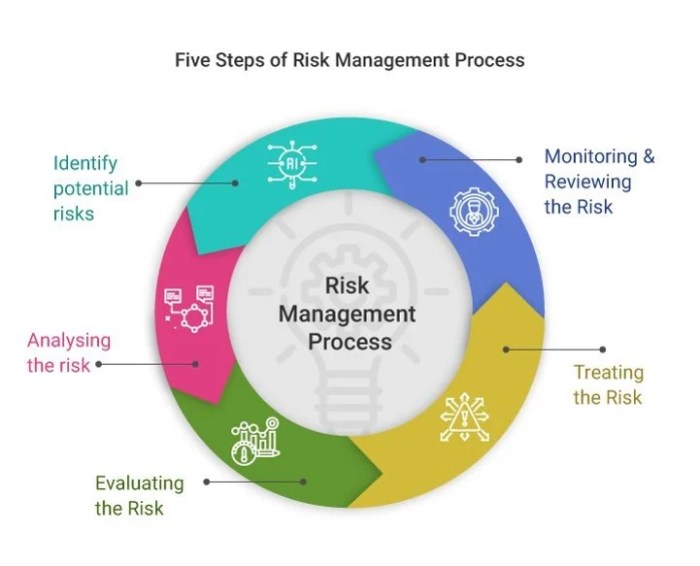
Risk management strategies are crucial in project management to identify, assess, and mitigate potential risks that may impact the project’s success. By implementing effective risk management plans, project managers can proactively address uncertainties and ensure the project’s objectives are met.
Risk Identification
One of the initial steps in risk management is identifying potential risks that may arise during the project lifecycle. This involves analyzing past projects, conducting brainstorming sessions with stakeholders, and utilizing risk assessment tools to create a comprehensive list of possible risks.
Risk Analysis
After identifying risks, the next step is to analyze their potential impact and likelihood of occurrence. This step helps prioritize risks based on their severity and develop strategies to address high-priority risks first. Risk analysis also involves quantifying risks to understand the potential cost and time implications on the project.
Risk Response Planning
Once risks are identified and analyzed, project managers develop risk response plans to mitigate or avoid potential threats. These plans may include risk avoidance, risk transfer, risk mitigation, or risk acceptance strategies depending on the nature of the risk. By having predefined response plans, project teams can effectively address risks as they arise.
Risk Monitoring and Control
Throughout the project lifecycle, it is essential to continuously monitor and control risks to ensure that the risk management strategies are effective. Regular risk reviews, status updates, and adjustments to risk response plans are necessary to adapt to changing project conditions and emerging risks. By actively managing risks, project managers can minimize their impact on project outcomes.
Risk Tolerance
In project management, risk tolerance refers to the level of risk that an organization or project team is willing to accept or take on in pursuit of its objectives. It is essential to understand and define risk tolerance to effectively manage risks throughout the project lifecycle.
Defining Risk Tolerance
Risk tolerance is determined by various factors such as the project’s goals, stakeholder expectations, regulatory requirements, and the organization’s risk appetite. It represents the acceptable amount of uncertainty that the project can withstand without jeopardizing its success.
- Risk tolerance is often expressed in terms of qualitative or quantitative measures, such as a percentage of budget allocated for contingencies or a specific threshold for schedule delays.
- Project managers and stakeholders collaborate to assess the potential impact of risks on project objectives and determine an appropriate risk tolerance level.
Setting Risk Tolerance Levels
Setting risk tolerance levels involves analyzing the project’s risk profile, prioritizing risks based on their potential impact and likelihood, and establishing thresholds for acceptable risks. This process helps project teams focus on high-priority risks while effectively managing uncertainties.
- Project sponsors and key stakeholders play a crucial role in setting risk tolerance levels by providing input on risk appetite and defining acceptable risk thresholds.
- Risk tolerance levels are documented in the project risk management plan and communicated to all team members to ensure a shared understanding of acceptable risk levels.
Relationship with Decision-making
Risk tolerance influences decision-making in project management by guiding project teams on how to respond to risks, uncertainties, and unexpected events. Understanding risk tolerance helps project managers make informed decisions that align with the project’s objectives and stakeholders’ expectations.
- Project teams consider risk tolerance levels when evaluating risk response strategies, determining mitigation actions, and making trade-off decisions between risks and rewards.
- By aligning risk tolerance with decision-making processes, project managers can prioritize risks effectively, allocate resources efficiently, and proactively address potential threats to project success.
Risk Response Planning
Risk response planning is a crucial aspect of project risk management that involves developing strategies to address identified risks and minimize their impact on the project. It is essential to have proactive and reactive risk response plans in place to effectively manage risks throughout the project lifecycle.
Developing Risk Response Plans
When developing risk response plans, project managers need to analyze each identified risk and determine the appropriate course of action to either mitigate the risk or respond to it if it occurs. This involves brainstorming potential strategies, evaluating their feasibility and impact, and documenting the chosen response plan in detail.
- Proactive risk response strategies involve taking preventive measures to reduce the likelihood or impact of a risk occurring. Examples include implementing additional safety measures, conducting training sessions, or diversifying resources to minimize dependencies.
- Reactive risk response strategies, on the other hand, involve responding to a risk after it has occurred. This may include activating contingency plans, reallocating resources, or seeking external support to mitigate the impact of the risk on the project.
Regularly Reviewing and Updating Risk Response Plans
It is crucial to regularly review and update risk response plans throughout the project lifecycle to ensure their effectiveness and relevance. As the project progresses and new risks emerge, existing response plans may need to be adjusted or new plans developed to address these evolving risks. By regularly reviewing and updating risk response plans, project teams can stay proactive in managing risks and maintain project success.
As we wrap up our exploration of risk management in project management, it becomes evident that proactive risk assessment and strategic planning are linchpins for project success. By understanding the nuances of risk tolerance and response planning, project managers can steer their projects towards favorable outcomes amidst uncertainties.
Q&A
What is the significance of conducting risk assessment in project management?
Risk assessment in project management is crucial as it helps in identifying potential risks early on, allowing project teams to develop effective strategies to mitigate them before they escalate.
How are risk tolerance levels determined in project management?
Risk tolerance levels in project management are typically set based on the project’s objectives, stakeholders’ preferences, and the organization’s risk appetite.
Why is it important to regularly review and update risk response plans in projects?
Regularly reviewing and updating risk response plans is vital as it ensures that project teams are equipped to address new risks that may emerge during the project lifecycle, thereby enhancing adaptability and resilience.


