Embark on a journey into the realm of risk tolerance, exploring its nuances and significance in financial decision-making. From understanding its impact on investments to managing risks effectively, this topic delves into essential aspects that every investor should grasp.
Overview of Risk Tolerance
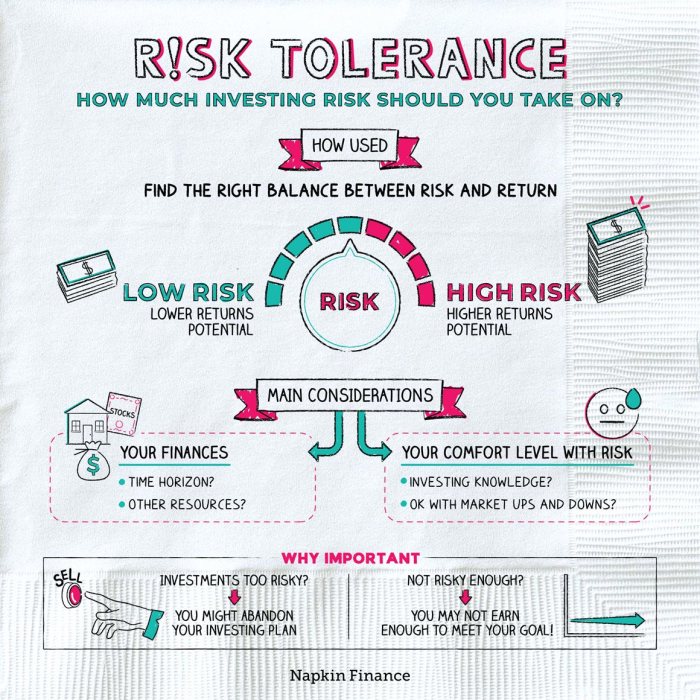
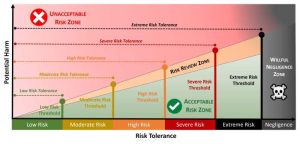
Risk tolerance is a crucial concept in financial planning that refers to an individual’s willingness and ability to withstand fluctuations in the value of their investments. It helps determine the appropriate mix of investments that align with an individual’s comfort level and financial goals.
Variability of Risk Tolerance
- Some individuals may have a high risk tolerance, meaning they are comfortable with the possibility of significant fluctuations in their investment value in exchange for potentially higher returns.
- On the other hand, some individuals may have a low risk tolerance, preferring more stable and conservative investments to avoid potential losses.
- Risk tolerance can also vary based on factors such as age, financial goals, time horizon, income level, investment knowledge, and personal preferences.
Importance of Understanding Risk Tolerance
Understanding risk tolerance is a crucial aspect of making informed investment decisions. It refers to an individual’s ability to handle fluctuations in the value of their investments over time. By knowing your risk tolerance, you can align your investment choices with your comfort level and financial goals, ultimately leading to a more balanced and suitable investment strategy.
Impact on Asset Allocation Strategies
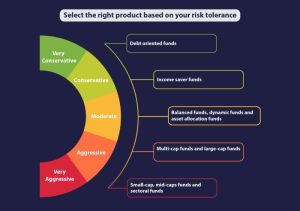
Asset allocation is a key component of any investment portfolio, and risk tolerance plays a significant role in determining the appropriate mix of assets. Investors with a higher risk tolerance may opt for a more aggressive strategy, investing a larger portion of their portfolio in higher-risk assets like stocks. On the other hand, those with a lower risk tolerance may prefer a more conservative approach, focusing on fixed-income securities or cash equivalents.
Understanding your risk tolerance helps in establishing a well-rounded asset allocation strategy that aligns with your financial objectives.
Relationship with Financial Goals
Risk tolerance is closely linked to financial goals as it influences the level of risk you are willing to take to achieve those goals. For instance, if your primary objective is capital preservation, you may have a lower risk tolerance and opt for safer investment options. Conversely, if you are aiming for significant growth, you may be comfortable with a higher level of risk in pursuit of potentially higher returns.
By understanding your risk tolerance in relation to your financial goals, you can tailor your investment approach to meet your specific needs and aspirations.
Assessing Risk Tolerance
When it comes to assessing risk tolerance, there are various methods and tools that can be utilized to gauge an individual’s comfort level with risk. These assessments are crucial in the financial world as they help investors make informed decisions about their investments based on their risk appetite.
Risk Tolerance Questionnaires
One common method used to assess risk tolerance is through risk tolerance questionnaires. These questionnaires typically consist of a series of questions that individuals answer to determine their risk tolerance level. By analyzing their responses, financial advisors can gain insights into how much risk an individual is willing to take with their investments.
Risk Capacity Assessments
Another approach to assessing risk tolerance is through risk capacity assessments. Unlike risk tolerance, which is more psychological, risk capacity looks at an individual’s financial ability to take on risk. Factors such as income, savings, and financial goals are considered to determine how much risk an individual can afford to take.
Psychometric Testing
Psychometric testing is a more advanced method of assessing risk tolerance, utilizing psychological tools to understand an individual’s risk preferences. These tests delve deeper into an individual’s mindset and emotions when it comes to risk, providing a more comprehensive view of their risk tolerance level.
Advantages and Disadvantages
Each method of assessing risk tolerance comes with its own set of advantages and disadvantages. Risk tolerance questionnaires are easy to administer but may not always provide a complete picture of an individual’s risk tolerance. Risk capacity assessments offer a more objective view but may overlook the psychological aspect of risk-taking. Psychometric testing provides in-depth insights but can be time-consuming and costly.
Real-life Scenarios
In real-life scenarios, risk tolerance assessments are vital for financial advisors to tailor investment strategies according to their clients’ risk profiles. For example, a young investor with a high risk tolerance may be recommended to invest in aggressive growth funds, while a retiree with a low risk tolerance may opt for more conservative investments to protect their savings. These assessments help ensure that investment decisions align with the individual’s risk preferences and financial goals.
Managing Risk based on Tolerance
When it comes to managing risk based on an individual’s risk tolerance, it is crucial to align investment strategies with their comfort level. This involves understanding how much volatility and potential loss one can handle without making emotional decisions that could negatively impact their financial goals.
Strategies for Managing Risk
- Diversification: One of the key strategies for managing risk based on tolerance is diversifying investments across different asset classes, industries, and geographic regions. This helps reduce the impact of a potential downturn in any single investment.
- Asset Allocation: By allocating assets based on risk tolerance, individuals can ensure that their portfolio is balanced and aligned with their comfort level. This may involve a mix of stocks, bonds, cash, and other assets.
- Regular Rebalancing: It is important to periodically review and rebalance the portfolio to maintain the desired risk level. This involves selling assets that have performed well and buying more of those that have underperformed to maintain the target asset allocation.
Examples of Diversification
Diversification can be tailored to an individual’s risk tolerance level by adjusting the mix of assets in the portfolio. For example, a conservative investor with low risk tolerance may have a higher allocation to bonds and cash, while an aggressive investor with high risk tolerance may have a heavier focus on stocks and alternative investments.
Adjusting Risk Management Techniques
As risk tolerance changes over time due to factors such as life events, market conditions, or personal preferences, it is important to adjust risk management techniques accordingly. This may involve reassessing the current risk level, revisiting investment goals, and making necessary changes to the portfolio to ensure it remains in line with the individual’s risk tolerance.
In conclusion, grasping risk tolerance is not just about numbers; it’s about aligning your financial goals with your comfort level. By comprehending this crucial element, you can navigate the complex world of investments with confidence and clarity.
Questions Often Asked
What is risk tolerance?
Risk tolerance refers to an individual’s willingness and ability to withstand fluctuations in the value of their investments.
How does risk tolerance impact asset allocation?
Risk tolerance influences the mix of assets in an investment portfolio, with higher tolerance allowing for more aggressive investments and vice versa.
Can risk tolerance change over time?
Yes, factors like age, financial situation, and market conditions can cause risk tolerance to evolve, necessitating periodic reassessments.