
Exploring the realm of risk management techniques, this introduction sets the stage for an insightful journey, engaging readers from the outset with a blend of clarity and depth.
It delves into various risk management strategies, from quantitative analysis to risk transfer, providing a robust foundation for understanding and implementing effective risk management practices.
Types of Risk Management Techniques
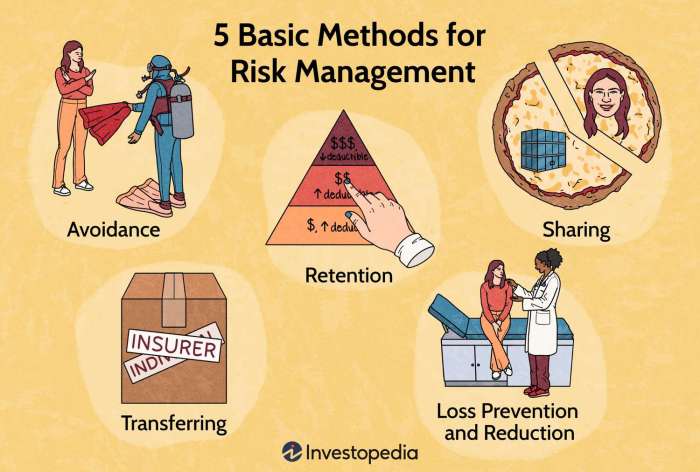
Risk management techniques are essential for businesses to identify, assess, and mitigate potential risks. Let’s explore some common methods used in risk management:
Quantitative Risk Analysis
Quantitative risk analysis involves the use of mathematical models and statistical tools to assess the impact of risks on a project or business. This method assigns numerical values to risks based on probability and potential losses, allowing for a more accurate evaluation of risk exposure.
Qualitative Risk Analysis
Qualitative risk analysis focuses on identifying and evaluating risks based on their potential impact and likelihood of occurrence. This method often involves subjective judgments and expert opinions to prioritize risks and develop appropriate risk response strategies.
Risk Avoidance Strategies
Risk avoidance strategies involve taking actions to eliminate or minimize the impact of identified risks. This may include changing project scope, avoiding high-risk activities, or implementing strict quality control measures to reduce the likelihood of negative outcomes.
Risk Transfer in Risk Management
Risk transfer involves shifting the financial burden of risks to a third party, such as insurance companies or subcontractors. By transferring risks, businesses can protect themselves from potential losses and uncertainties, allowing them to focus on their core operations without the fear of significant financial setbacks.
Risk Assessment
Risk assessment is a crucial step in the risk management process that involves identifying, evaluating, and prioritizing risks to minimize their impact on an organization. The main purpose of risk assessment is to help organizations understand potential risks they may face and develop strategies to mitigate or eliminate them.
Steps in Conducting a Risk Assessment
- Identify Risks: The first step is to identify potential risks that could affect the organization’s objectives or projects.
- Assess Risks: Once risks are identified, they need to be assessed in terms of their likelihood and impact on the organization.
- Prioritize Risks: Risks should be prioritized based on their severity and likelihood of occurrence to determine which ones require immediate attention.
- Develop Risk Mitigation Strategies: After prioritizing risks, organizations can develop strategies to mitigate or eliminate the identified risks.
- Monitor and Review: Regular monitoring and review of risks are essential to ensure that the risk management strategies are effective and up to date.
Tools Used for Risk Assessment
- Risk Registers: A risk register is a tool used to capture and track all identified risks, along with relevant information such as their likelihood, impact, and mitigation strategies.
- SWOT Analysis: SWOT analysis is a strategic planning tool that helps organizations identify internal strengths and weaknesses, as well as external opportunities and threats.
- Delphi Technique: The Delphi technique involves gathering inputs from experts anonymously to reach a consensus on potential risks and their impacts.
Criteria for Evaluating Risks During Assessment
- Likelihood: The likelihood of a risk occurring should be assessed based on historical data, expert opinions, and other relevant factors.
- Impact: The impact of a risk on the organization’s objectives, projects, or stakeholders should be evaluated to determine its severity.
- Urgency: Risks that pose an immediate threat or have a short timeframe for mitigation should be given higher priority.
- Manageability: The organization’s ability to effectively manage or mitigate a risk should also be considered during the assessment process.
Risk Management
Risk management is a crucial process that involves identifying, assessing, and prioritizing risks, followed by implementing strategies to mitigate or control those risks. It is essential for organizations to effectively manage risks to ensure the achievement of their objectives and protect their assets.
Proactive vs. Reactive Risk Management
Proactive risk management involves identifying and addressing risks before they occur, focusing on prevention and preparation. On the other hand, reactive risk management deals with responding to risks after they have already occurred, focusing on damage control and recovery. Proactive risk management is generally considered more effective and efficient in minimizing potential negative impacts.
Significance of Risk Monitoring and Control
Risk monitoring and control are vital aspects of risk management, as they involve tracking identified risks, evaluating the effectiveness of risk mitigation strategies, and making necessary adjustments to ensure risks are managed effectively. Continuous monitoring and control help organizations stay ahead of potential risks and respond promptly to any emerging threats.
Examples of Successful Risk Management Practices
Apple Inc.
Apple’s supply chain risk management practices have been highly successful, allowing the company to minimize disruptions and maintain product quality even during challenging times.
Toyota Motor Corporation
Toyota is known for its robust risk management practices, particularly in the automotive industry, where it has effectively addressed quality control issues and product recalls.
NASA
NASA’s risk management practices in space exploration have been instrumental in ensuring the safety of astronauts and the success of missions, despite the inherent risks involved in space travel.
Risk Tolerance
Risk tolerance refers to the level of risk that an organization or individual is willing to accept in pursuit of their objectives. It plays a crucial role in decision-making processes as it helps determine the acceptable level of risk that an organization is willing to undertake to achieve its goals.
Determining Risk Tolerance
In an organization, risk tolerance is typically determined through a combination of factors such as the organization’s risk management policies, industry standards, regulatory requirements, and stakeholder expectations. It involves assessing the potential impact of risks on the organization’s operations, finances, reputation, and overall objectives.
Relationship with Risk Appetite
Risk tolerance is closely related to risk appetite, which refers to the amount of risk an organization is willing to take on in pursuit of its strategic objectives. While risk appetite defines the overall level of risk that an organization is willing to accept, risk tolerance sets specific thresholds for different types of risks based on their impact and likelihood.
Aligning Risk Tolerance with Business Objectives
To align risk tolerance with business objectives, organizations can implement the following strategies:
- Establish clear risk management policies and procedures that reflect the organization’s risk tolerance levels.
- Regularly review and update risk tolerance thresholds based on changes in the business environment, industry trends, and regulatory requirements.
- Engage stakeholders in the risk management process to ensure that their expectations and concerns are considered when setting risk tolerance levels.
- Integrate risk tolerance considerations into strategic planning processes to ensure that risk management aligns with the organization’s overall goals and objectives.
In conclusion, the discussion on risk management techniques highlights the critical aspects of risk assessment, proactive and reactive management approaches, and aligning risk tolerance with organizational goals. This comprehensive overview serves as a valuable resource for navigating the complex landscape of risk management.
Essential FAQs
What is the importance of risk avoidance strategies?
Risk avoidance strategies help in minimizing the impact of potential risks by steering clear of high-risk activities or situations.
How is risk tolerance determined within an organization?
Risk tolerance within an organization is often determined based on factors such as financial stability, industry regulations, and overall risk appetite.
What are the criteria for evaluating risks during assessment?
The criteria for evaluating risks during assessment include likelihood of occurrence, potential impact, and the organization’s capability to manage the risk effectively.


