
Market risk management strategies set the stage for this enthralling narrative, offering readers a glimpse into a story that is rich in detail and brimming with originality from the outset. In today’s dynamic business environment, understanding and effectively implementing risk management strategies is crucial for organizations seeking success amidst uncertainty.
As we delve deeper into the realm of market risk management strategies, we uncover a world where calculated assessments, strategic decision-making, and adaptability reign supreme. Let’s explore the intricacies of risk assessment, various management strategies, risk tolerance, and the ever-evolving landscape of market conditions.
Risk Assessment
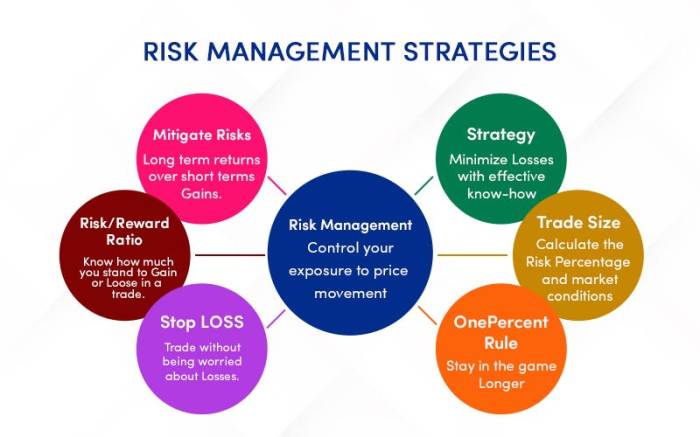
Conducting a thorough risk assessment is crucial before implementing market risk management strategies. This process helps organizations identify and evaluate potential risks that could impact their financial stability and overall performance.
Key Factors to Consider
- Market Volatility: Assess the historical volatility of the markets in which the organization operates to anticipate potential fluctuations.
- Regulatory Changes: Consider the impact of regulatory changes on the organization’s operations and financial health.
- Competitive Landscape: Analyze the competitive environment to understand potential threats and opportunities.
- Global Events: Evaluate the potential impact of global events on the organization’s market risk exposure.
Identifying Potential Market Risks
- Scenario Analysis: Conduct scenario analysis to simulate various market conditions and assess the organization’s vulnerability.
- Sensitivity Analysis: Perform sensitivity analysis to understand how changes in market variables could affect the organization’s financial performance.
- Historical Data: Review historical market data to identify trends and patterns that could indicate potential risks.
- Expert Input: Seek input from market experts and analysts to gain insights into emerging risks and market trends.
Risk Management
Risk management plays a crucial role in helping organizations navigate the uncertainties of the market environment. By identifying, assessing, and mitigating various types of risks, companies can protect themselves from potential financial losses and capitalize on opportunities for growth.
Types of Market Risks
Market risks are inherent in the financial landscape and can have a significant impact on businesses. Some common types of market risks include:
- Interest Rate Risk: Fluctuations in interest rates can affect the cost of borrowing and investment returns.
- Foreign Exchange Risk: Changes in exchange rates can impact the value of international transactions and investments.
- Commodity Price Risk: Price volatility of commodities can affect production costs and revenue for companies.
- Equity Price Risk: Fluctuations in stock prices can impact the value of investment portfolios and company valuations.
Successful Risk Management Strategies
Companies employ various strategies to manage market risks effectively. Some examples of successful risk management strategies include:
- Diversification: Spreading investments across different asset classes can help mitigate the impact of market fluctuations.
- Hedging: Using financial instruments such as futures and options to offset potential losses from adverse price movements.
- Stress Testing: Simulating extreme market scenarios to assess the resilience of the organization’s financial position.
Role of Risk Management
Risk management is essential for organizations to minimize financial losses and maximize opportunities for growth. By proactively identifying and addressing risks, companies can make informed decisions and adapt to changing market conditions effectively. Additionally, effective risk management practices can enhance stakeholder confidence and support long-term business sustainability.
Risk Tolerance
Risk tolerance refers to the level of uncertainty or risk that an organization is willing to accept in pursuit of its objectives. It plays a crucial role in the development of effective market risk management strategies as it helps determine the amount of risk exposure that an organization is comfortable with.
Variability Across Industries
In different industries, risk tolerance can vary significantly based on factors such as regulatory requirements, market dynamics, and financial stability. For example, industries like technology and biotech may have higher risk tolerance due to the nature of their business models which often involve high levels of innovation and uncertainty. On the other hand, industries like utilities or healthcare may have lower risk tolerance as they prioritize stability and predictability.
- Technology Industry: Companies in this sector often have higher risk tolerance as they need to innovate rapidly to stay competitive.
- Healthcare Industry: Organizations in healthcare typically have lower risk tolerance due to the critical nature of their services and the need for stability.
- Financial Sector: Financial institutions may have moderate risk tolerance depending on their specific operations and regulatory requirements.
Influence on Decision-Making
Risk tolerance directly impacts decision-making processes within an organization by guiding the level of risk that management is willing to take on in pursuit of strategic goals. A higher risk tolerance may lead to more aggressive investment strategies or product development initiatives, while a lower risk tolerance may result in a more conservative approach focused on stability and long-term sustainability.
Understanding the risk tolerance of an organization is essential for aligning risk management strategies with its overall objectives and ensuring a balanced approach to risk-taking.
Risk Management Strategies
When it comes to managing market risk, there are various strategies that can be employed to mitigate potential losses. These strategies include diversification, hedging, and insurance, each serving a unique purpose in safeguarding investments.
Diversification
Diversification is a strategy that involves spreading investments across different asset classes, industries, and geographic regions to reduce the impact of a single market event on the overall portfolio. By not putting all eggs in one basket, investors can lower the risk of significant losses.
Hedging
Hedging is a risk management technique that involves taking offsetting positions in the market to minimize potential losses. This can involve using derivatives such as options or futures contracts to protect against adverse price movements.
Insurance
Insurance is another risk management strategy where investors transfer the risk of potential losses to an insurance company in exchange for a premium. This can provide protection against catastrophic events that could result in substantial financial damage.
Proactive vs. Reactive Approaches
When it comes to managing market risk, there are proactive and reactive approaches that investors can take. Proactive risk management involves identifying and addressing potential risks before they materialize, while reactive approaches involve responding to risks after they have already impacted the portfolio.
Regular Review and Adjustment
It is crucial for investors to regularly review and adjust their risk management strategies to adapt to changing market conditions. By staying informed and proactive, investors can ensure that their portfolios are well-protected against unexpected events and market fluctuations.
In conclusion, market risk management strategies serve as a compass in navigating the turbulent waters of financial markets, guiding organizations towards stability and growth. By embracing a proactive approach, staying attuned to risk tolerance levels, and continuously refining strategies, businesses can thrive in the face of uncertainty and secure a competitive edge.
Common Queries
What role does risk assessment play in market risk management strategies?
Risk assessment is crucial as it helps organizations identify potential market risks, allowing them to develop effective management strategies to mitigate these risks.
How do proactive risk management strategies differ from reactive approaches?
Proactive strategies involve anticipating and preparing for risks in advance, while reactive approaches respond to risks after they have occurred.
Why is it important to regularly review and adjust risk management strategies?
Regular reviews ensure that strategies remain relevant and effective in adapting to changing market conditions, helping organizations stay agile and competitive.


