Delving into Risk tolerance definition, this introduction immerses readers in a unique and compelling narrative, with casual formal language style that is both engaging and thought-provoking from the very first sentence.
Exploring the concept of risk tolerance and its significance in the realm of investing, this overview sheds light on how individuals and organizations assess and manage risks to achieve their financial goals effectively.
Risk Tolerance Definition
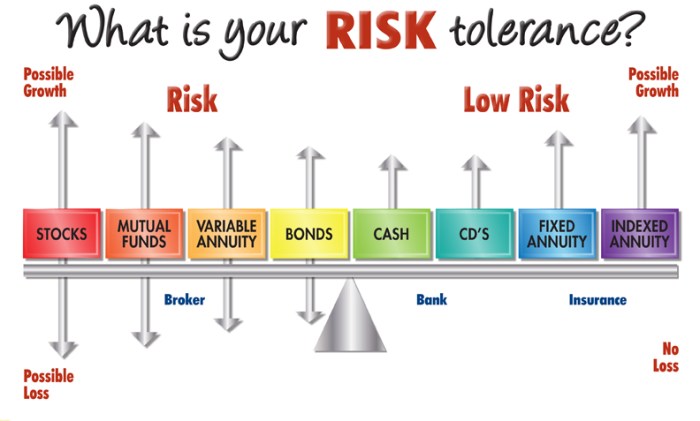
Risk tolerance refers to the degree of variability in investment returns that an individual or organization is willing to withstand in their investment portfolio. It is a crucial factor in determining the appropriate investment strategy and asset allocation based on the investor’s comfort level with risk.
Significance of Risk Tolerance in Investing
Risk tolerance plays a vital role in shaping investment decisions as it helps investors align their portfolio with their financial goals and risk preferences. By understanding and assessing their risk tolerance, investors can choose investments that match their comfort level, thus reducing the chances of making hasty decisions during market fluctuations.
Determination of Risk Tolerance
Risk tolerance for individuals is often determined through risk assessment questionnaires that evaluate factors such as investment knowledge, financial goals, time horizon, and emotional tolerance towards market volatility. For organizations, risk tolerance is typically defined by the board of directors or senior management based on the organization’s objectives, financial capacity, and risk appetite.
Examples of High-Risk Tolerance vs. Low-Risk Tolerance
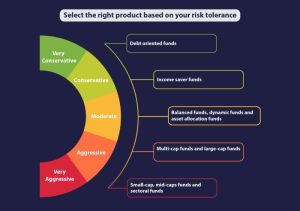
- An individual with a high-risk tolerance may choose to invest a significant portion of their portfolio in volatile assets such as stocks or cryptocurrencies, aiming for higher returns despite the increased risk of potential losses.
- In contrast, an individual with a low-risk tolerance may opt for conservative investments like bonds or certificates of deposit, prioritizing capital preservation over the potential for high returns.
- Similarly, an organization with a high-risk tolerance may pursue aggressive growth strategies or invest in emerging markets, while an organization with a low-risk tolerance may focus on stable, low-risk investments to safeguard capital.
Risk Assessment
Risk assessment is a crucial process in identifying potential risks that may impact an individual or organization. By evaluating and analyzing various factors, risk assessment helps in understanding the likelihood and severity of these risks.
Process of Risk Assessment
- Identification of potential risks: The first step involves recognizing and listing all possible risks that could affect the desired outcome.
- Assessment of risk probability: Analyzing the likelihood of each risk occurring based on historical data, expert opinions, or statistical models.
- Evaluation of risk impact: Estimating the potential consequences or impact of each identified risk on the project, process, or decision.
- Risk prioritization: Ranking risks based on their probability and impact to focus on addressing high-priority risks first.
Tools and Methods Used
- Risk Registers: Documenting identified risks along with their characteristics, potential impact, and mitigation strategies.
- SWOT Analysis: Assessing strengths, weaknesses, opportunities, and threats to understand internal and external risks.
- Delphi Technique: Involving experts to achieve consensus on risk likelihood and impact through multiple rounds of feedback.
- Monte Carlo Simulation: Utilizing statistical modeling to simulate various outcomes based on different risk scenarios.
Importance of Thorough Risk Assessment
- Enhanced Decision-Making: By identifying and evaluating risks beforehand, decision-makers can make informed choices to mitigate or avoid potential negative consequences.
- Resource Allocation: Proper risk assessment helps in allocating resources effectively to address high-impact risks and minimize losses.
- Proactive Risk Management: Conducting thorough risk assessment enables proactive risk management strategies to reduce unexpected events and ensure business continuity.
Risk Management
Risk management is the process of identifying, assessing, and prioritizing risks followed by coordinated and economical application of resources to minimize, monitor, and control the probability and impact of unfortunate events or to maximize the realization of opportunities.
Role of Risk Management
Risk management plays a crucial role in mitigating risks by providing a structured approach to identifying, analyzing, and responding to potential risks. It helps organizations anticipate potential threats and opportunities, allowing them to make informed decisions to protect their assets and achieve their objectives.
Common Strategies for Risk Management
- Insurance: Transferring risk to an insurance company to protect against financial losses due to unforeseen events.
- Diversification: Spreading investments across different assets to reduce the impact of a single event on the overall portfolio.
- Hedging: Using financial instruments to offset the risk of adverse price movements in the market.
- Contingency Planning: Developing alternative plans to address potential risks and ensure business continuity.
Examples of Successful Risk Management Practices
- Amazon: Amazon’s risk management strategy includes diversifying its product offerings, investing in technology to improve efficiency, and ensuring supply chain resilience.
- Apple: Apple’s risk management focuses on innovation, customer loyalty, and strategic partnerships to maintain market competitiveness and financial stability.
- Toyota: Toyota’s risk management practices involve quality control measures, supply chain management, and continuous improvement initiatives to mitigate operational risks and ensure product quality.
Factors Influencing Risk Tolerance
Risk tolerance is influenced by various factors that can shape an individual’s or organization’s approach to risk. These factors can range from economic conditions to personal circumstances and even psychological aspects.
Economic Conditions and Personal Circumstances
Economic conditions play a significant role in determining risk tolerance. During times of economic prosperity, individuals or organizations may be more willing to take on higher levels of risk in pursuit of greater returns. On the other hand, during economic downturns or uncertainties, risk aversion tends to increase as the focus shifts towards preserving capital.Personal circumstances also play a crucial role in influencing risk tolerance.
Factors such as age, income level, financial responsibilities, and long-term goals can all impact how much risk an individual is willing to take on. Younger individuals with fewer financial obligations may be more inclined to take risks compared to those nearing retirement or with dependents to support.
Psychological Aspects
Psychological factors can significantly affect an individual’s risk tolerance levels. Behavioral biases, such as loss aversion and overconfidence, can distort one’s perception of risk and lead to suboptimal decision-making. Fear, greed, and past experiences with risk can also shape an individual’s attitude towards taking on risk.Overall, a combination of economic conditions, personal circumstances, and psychological aspects work together to influence an individual’s or organization’s risk tolerance.
Understanding these factors is essential for making informed decisions when it comes to managing risk effectively.
In conclusion, understanding risk tolerance is crucial for making informed investment decisions and navigating the uncertainties of the financial landscape with confidence. By grasping the intricacies of risk tolerance, individuals and organizations can tailor their strategies to maximize returns while minimizing potential losses.
FAQs
What factors contribute to determining an individual’s risk tolerance?
Factors such as financial goals, time horizon, and personal comfort with risk play a significant role in defining one’s risk tolerance.
How can organizations effectively manage risks based on their risk tolerance?
Organizations can implement risk mitigation strategies, diversify their investments, and conduct regular risk assessments to align their risk management practices with their tolerance levels.
Is risk tolerance a static or dynamic concept?
Risk tolerance can evolve over time based on changing economic conditions, personal circumstances, and the individual’s or organization’s risk perception.