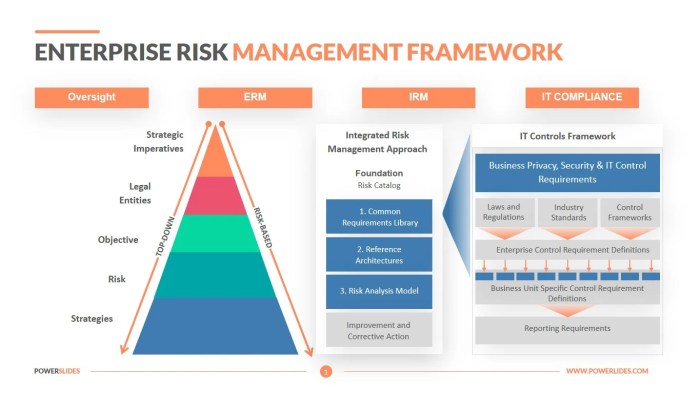
Exploring the realm of Enterprise risk assessment, this introduction sets the stage by highlighting the significance of assessing risks in organizational decision-making. From identifying risks to implementing effective strategies, this topic delves into the core components that drive risk assessment processes.
Overview of Enterprise Risk Assessment
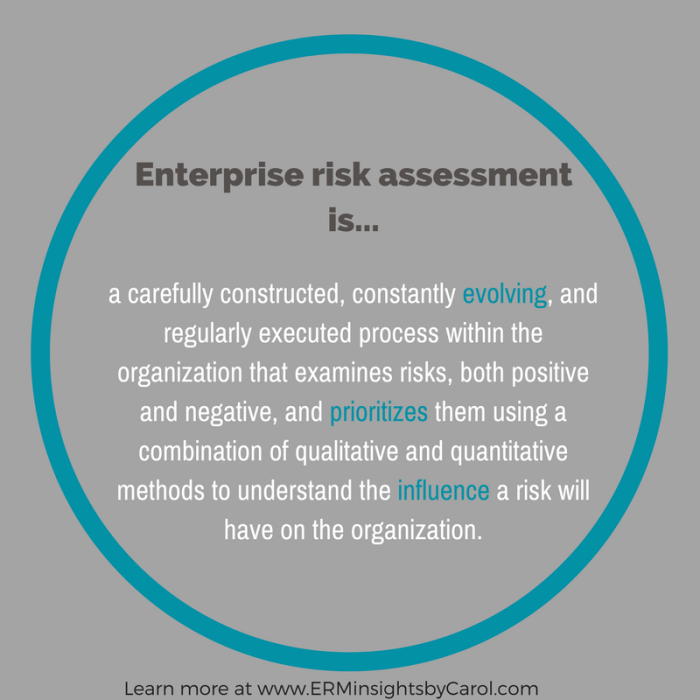
Enterprise risk assessment is a process that organizations use to identify, analyze, and manage potential risks that could impact their operations, projects, or overall business goals. By conducting a comprehensive risk assessment, companies can better understand the risks they face and develop strategies to mitigate or avoid them.
Types of Risks Assessed
- Financial risks, such as market fluctuations, currency exchange rates, or credit risks.
- Operational risks, including supply chain disruptions, technology failures, or regulatory compliance issues.
- Strategic risks, such as competition, changes in consumer behavior, or industry disruptions.
- Compliance risks, related to legal and regulatory requirements that could lead to penalties or lawsuits.
Importance of Enterprise Risk Assessment
Enterprise risk assessment plays a crucial role in decision-making processes within organizations. By understanding the potential risks they face, companies can make informed decisions about resource allocation, strategic planning, and investments. This proactive approach helps businesses anticipate and respond to challenges effectively, ultimately enhancing their resilience and sustainability in a rapidly changing business environment.
Components of Enterprise Risk Assessment
Risk assessment is a crucial process for organizations to identify, analyze, and evaluate potential risks that could impact their operations. It involves several key components that contribute to a comprehensive understanding of the risks faced by the organization.
Identifying Risks
- Start by identifying potential risks that could affect the organization’s objectives, projects, or processes.
- Consider internal and external factors that may pose a threat, such as financial risks, operational risks, compliance risks, or strategic risks.
- Engage with stakeholders at all levels of the organization to gather diverse perspectives on potential risks.
Analyzing Risks
- Once risks are identified, conduct a detailed analysis to assess the likelihood and impact of each risk on the organization.
- Use risk assessment tools and techniques to prioritize risks based on their severity and likelihood of occurrence.
- Consider the interconnectedness of risks and how they may compound or mitigate each other.
Evaluating Risks
- After analyzing risks, evaluate the organization’s risk tolerance and appetite to determine which risks are acceptable and which require mitigation.
- Develop risk mitigation strategies to address high-priority risks and reduce their impact on the organization.
- Regularly review and update the risk assessment process to adapt to changing internal and external factors.
Role of Stakeholders
- Stakeholders play a crucial role in the risk assessment process by providing valuable insights into the organization’s operations and potential risks.
- Engage with stakeholders from different departments, levels, and functions to ensure a holistic understanding of risks across the organization.
- Communicate effectively with stakeholders to gather relevant information, share findings, and collaborate on risk mitigation strategies.
Risk Management Strategies
When it comes to enterprise risk assessment, organizations utilize various risk management strategies to identify, assess, and mitigate risks effectively. These strategies help in minimizing potential threats and maximizing opportunities for the business.
Proactive vs. Reactive Risk Management Approaches
Proactive risk management involves taking preventive measures to address risks before they occur. This approach focuses on identifying potential risks early on and implementing strategies to mitigate them. On the other hand, reactive risk management deals with responding to risks after they have already occurred. This approach involves managing the consequences of risks that have materialized.
Examples of Effective Risk Mitigation
- Implementing robust cybersecurity measures to protect sensitive data from cyber threats.
- Diversifying investment portfolios to reduce financial risks associated with market fluctuations.
- Developing a business continuity plan to ensure operations can continue in the event of a disaster.
- Regularly conducting risk assessments to identify and address emerging risks proactively.
- Establishing internal controls and protocols to minimize operational risks within the organization.
Risk Tolerance and Risk Appetite
Risk tolerance and risk appetite are two key concepts in enterprise risk assessment that play a crucial role in decision-making processes within an organization.
Definition of Risk Tolerance and Risk Appetite
Risk tolerance refers to the level of risk that an organization is willing to accept or take on in pursuit of its objectives. It represents the organization’s capacity to withstand potential losses or adverse outcomes. On the other hand, risk appetite defines the amount and type of risk that an organization is willing to pursue or retain in order to achieve its goals.
It reflects the organization’s willingness to take risks in order to seize opportunities and drive growth.
Influence of Risk Tolerance on Decision-Making
- Risk tolerance directly influences decision-making within an organization by guiding the evaluation of risks and rewards associated with various choices.
- It helps management teams to determine the acceptable level of risk exposure that aligns with the organization’s overall objectives.
- By understanding the organization’s risk tolerance, decision-makers can make informed choices that balance risk-taking with potential benefits.
Importance of Aligning Risk Tolerance with Organizational Objectives
- Aligning risk tolerance with organizational objectives is essential for ensuring that risk-taking activities are in line with the company’s strategic direction.
- It helps in establishing a risk management framework that supports the achievement of business goals while managing potential threats effectively.
- When risk tolerance is aligned with organizational objectives, it promotes a risk-aware culture within the organization and enhances decision-making processes at all levels.
In conclusion, Enterprise risk assessment proves to be a vital tool for organizations seeking to navigate uncertainties and make informed decisions. By understanding risk tolerance, leveraging risk management strategies, and aligning objectives, businesses can proactively mitigate risks and enhance their resilience in dynamic environments.
FAQ Summary
What is the main purpose of enterprise risk assessment?
Enterprise risk assessment aims to identify, evaluate, and manage risks that could impact an organization’s objectives and decision-making processes.
How does risk tolerance influence decision-making in organizations?
Risk tolerance sets the threshold for the amount of risk an organization is willing to accept in pursuit of its goals, guiding decision-making processes to align with its risk appetite.
What are some examples of proactive risk management strategies?
Proactive risk management strategies include risk avoidance, risk reduction, risk sharing, and risk acceptance, all aimed at mitigating potential risks before they escalate.


