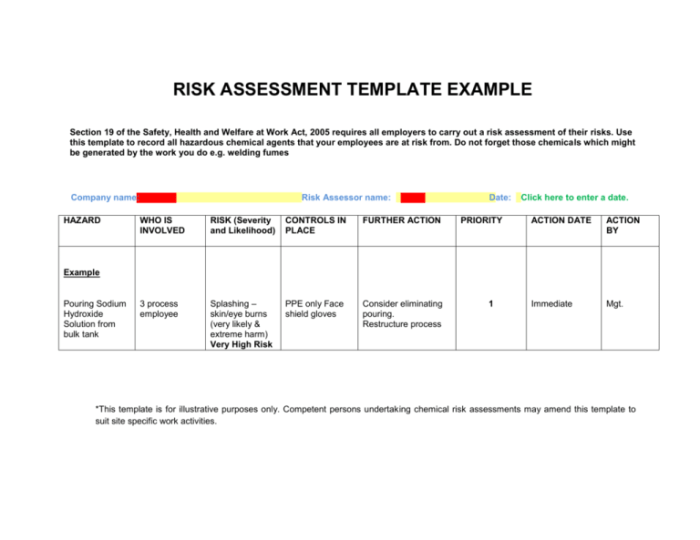
As Health and safety risk assessment takes center stage, this opening passage beckons readers with casual formal language style into a world crafted with good knowledge, ensuring a reading experience that is both absorbing and distinctly original.
In today’s dynamic environments, ensuring the safety and well-being of individuals is paramount. Conducting thorough risk assessments plays a crucial role in identifying and mitigating potential hazards, ultimately creating safer spaces for everyone. Let’s delve into the intricacies of Health and safety risk assessment to understand its significance and impact.
Introduction to Health and Safety Risk Assessment
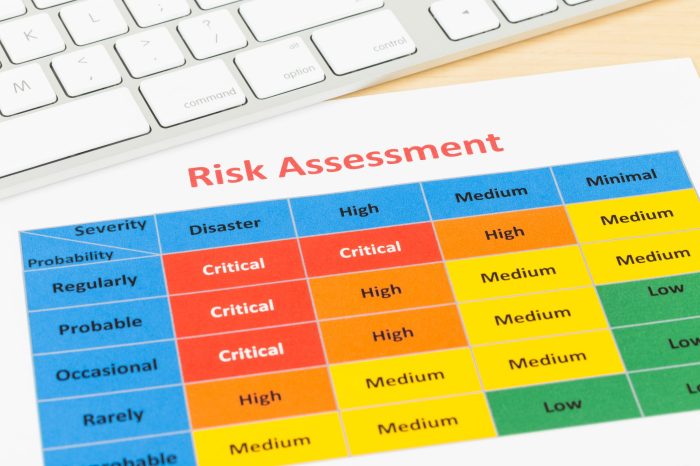
Health and safety risk assessment is a systematic process of identifying, analyzing, and evaluating potential hazards in the workplace or any environment that could cause harm to individuals. It involves taking proactive measures to eliminate or minimize risks to ensure the safety and well-being of everyone involved.
Conducting risk assessments is crucial in various environments to prevent accidents, injuries, and illnesses. By identifying potential hazards and assessing the level of risk associated with them, organizations can implement control measures to mitigate these risks effectively.
The Importance of Risk Assessments
- Risk assessments help in identifying potential hazards that may not be immediately apparent, ensuring a safe working environment for employees.
- By evaluating risks, organizations can prioritize areas for improvement and allocate resources effectively to prevent accidents and injuries.
- Regular risk assessments promote a culture of safety awareness and compliance with health and safety regulations.
Components of a Health and Safety Risk Assessment
Risk assessment is a crucial process in ensuring the health and safety of individuals in various environments. There are key components that should be included in a comprehensive risk assessment to effectively identify, evaluate, and prioritize risks.
List of Key Components:
- Identification of Hazards: This involves identifying potential sources of harm or danger in the workplace or environment.
- Assessment of Risks: Once hazards are identified, the next step is to assess the risks associated with each hazard.
- Control Measures: Implementing control measures to mitigate or eliminate the risks identified during the assessment.
- Monitoring and Review: Regularly monitoring and reviewing the effectiveness of control measures and making adjustments as needed.
- Record Keeping: Keeping detailed records of the risk assessment process, findings, and actions taken.
Identifying Hazards in a Risk Assessment:
When conducting a risk assessment, it is essential to actively look for potential hazards that could cause harm or injury. This can be done through:
- Physical inspections of the workplace or environment
- Reviewing accident and incident reports
- Consulting with employees or individuals working in the area
- Referring to safety data sheets for hazardous substances
Evaluating and Prioritizing Risks:
After identifying hazards, it is crucial to evaluate and prioritize risks based on their severity and likelihood of occurrence. This can be done by:
- Assessing the potential consequences of each risk if it were to occur
- Evaluating the likelihood of the risk happening
- Assigning a risk rating based on severity and likelihood
- Prioritizing risks that pose the greatest threat to health and safety
Risk Assessment Methods
When it comes to assessing health and safety risks, there are various methods that can be utilized to ensure a comprehensive evaluation. These methods can range from qualitative to quantitative approaches, each offering its own advantages and limitations.
Qualitative Risk Assessment
Qualitative risk assessment involves the subjective evaluation of risks based on expert judgment and experience. This method does not rely on numerical data but rather on the expertise of individuals conducting the assessment. It is useful for identifying potential hazards and risks in a broad sense, providing a qualitative understanding of the likelihood and severity of those risks.
- Job Safety Analysis (JSA): A technique that focuses on job tasks as a way to identify hazards before they occur.
- Fault Tree Analysis (FTA): A method used to identify the root causes of a specific hazard or risk event.
- Hazard and Operability Study (HAZOP): A structured and systematic examination of a planned or existing process or operation.
Quantitative Risk Assessment
Quantitative risk assessment involves the use of numerical data and statistical analysis to quantify risks more precisely. This method allows for a more accurate estimation of the probability and consequences of specific risks, providing a more detailed understanding of the overall risk profile.
- Fault Tree Analysis (FTA): While also used in qualitative risk assessment, FTA can be applied quantitatively by assigning probabilities to events and analyzing their impact on the overall risk.
- Event Tree Analysis (ETA): A method that models the sequence of events following an initiating event to assess the likelihood and consequences of various outcomes.
- Monte Carlo Simulation: A technique that generates random samples of possible outcomes to calculate the probability of different risk scenarios.
Risk Management Strategies
When it comes to risk management in relation to risk assessment, it involves the process of identifying, assessing, and prioritizing risks followed by the application of resources to minimize, control, and monitor the impact of these risks. It is a proactive approach to dealing with potential hazards and ensuring the safety and well-being of individuals in various environments.
Developing Risk Control Measures
Developing risk control measures based on assessment findings is crucial in mitigating potential risks. It involves implementing strategies to eliminate or reduce the likelihood of incidents occurring and minimizing the impact if they do occur. This can include implementing safety protocols, providing training to employees, using protective equipment, and ensuring compliance with regulations and standards.
Examples of Effective Risk Management Strategies
- Implementing regular safety inspections and audits to identify potential hazards and areas of improvement.
- Establishing clear communication channels for reporting incidents and near misses to address issues promptly.
- Utilizing technology such as sensors and monitoring devices to detect risks in real-time and take immediate action.
- Creating a culture of safety by promoting awareness, training, and involvement of all employees in risk management processes.
- Developing contingency plans and emergency response procedures to address unforeseen risks and minimize their impact.
Risk Tolerance and Acceptable Risk Levels
Risk tolerance refers to the level of risk that an organization or individual is willing to accept in pursuit of their objectives. It influences decision-making in risk management by helping organizations determine the acceptable level of risk they are willing to take on to achieve their goals. Understanding risk tolerance is crucial in developing effective risk management strategies.
Defining Risk Tolerance
Risk tolerance is often influenced by various factors such as the organization’s risk appetite, regulatory requirements, stakeholder expectations, and the nature of the business operations. It is essential to strike a balance between taking risks to drive growth and innovation while ensuring that risks are managed within acceptable limits.
Acceptable Risk Levels
Acceptable risk levels vary across different contexts and industries. What may be considered an acceptable risk level in one industry may not be acceptable in another. For example, a manufacturing company may have a higher tolerance for operational risks compared to a financial institution due to the nature of their business activities and potential impact on stakeholders.
Determining Risk Tolerance and Setting Goals
Organizations determine their risk tolerance by conducting thorough risk assessments, considering their risk appetite, regulatory requirements, and business objectives. Once the risk tolerance is established, organizations can set risk management goals and develop strategies to mitigate risks that exceed their tolerance levels. This helps organizations align their risk management practices with their overall objectives and ensure that risks are managed effectively.
In conclusion, Health and safety risk assessment is not just a bureaucratic requirement but a key tool in safeguarding lives and promoting a culture of safety. By incorporating best practices in risk assessment, organizations can proactively prevent accidents and create secure environments for all. Stay informed, stay safe!
Q&A
What is the role of risk assessments in promoting workplace safety?
Risk assessments help organizations identify potential hazards, evaluate risks, and implement control measures to create safer work environments.
How can organizations determine their risk tolerance levels?
Organizations can assess their risk tolerance by considering factors such as the nature of their operations, regulatory requirements, and the potential impact of risks on their stakeholders.
What are some common tools used in risk assessments?
Common tools include checklists, flowcharts, incident reports, and safety data sheets, which help in identifying, evaluating, and managing risks effectively.


