With Enterprise risk management at the forefront, this paragraph opens a window to an amazing start and intrigue, inviting readers to embark on a storytelling journey filled with unexpected twists and insights.
Enterprise Risk Management (ERM) is a crucial aspect of organizational success, ensuring that risks are identified, assessed, and managed effectively to enhance security and growth. By delving into the primary objectives and key components of ERM, businesses can navigate uncertainties with confidence and resilience.
Introduction to Enterprise Risk Management (ERM)
Enterprise Risk Management (ERM) is a comprehensive approach to identifying, assessing, and managing risks within an organization. It involves the coordination of activities and processes to deal with potential threats that may affect the achievement of organizational objectives.
Importance of ERM
- ERM helps organizations anticipate potential risks and take proactive measures to mitigate them, reducing the likelihood of negative impacts on operations.
- By implementing ERM, companies can enhance decision-making processes by considering risks and opportunities in a structured manner.
- Having an effective ERM framework in place can improve overall performance, resilience, and sustainability of the organization.
Primary Objectives of ERM
- Identifying and assessing risks: ERM aims to identify and evaluate potential risks that may impact the organization’s objectives.
- Managing and controlling risks: ERM involves developing strategies to address risks and implementing controls to mitigate their impact.
- Monitoring and reporting: ERM helps in monitoring risk management activities and providing regular reports to stakeholders on the status of risks within the organization.
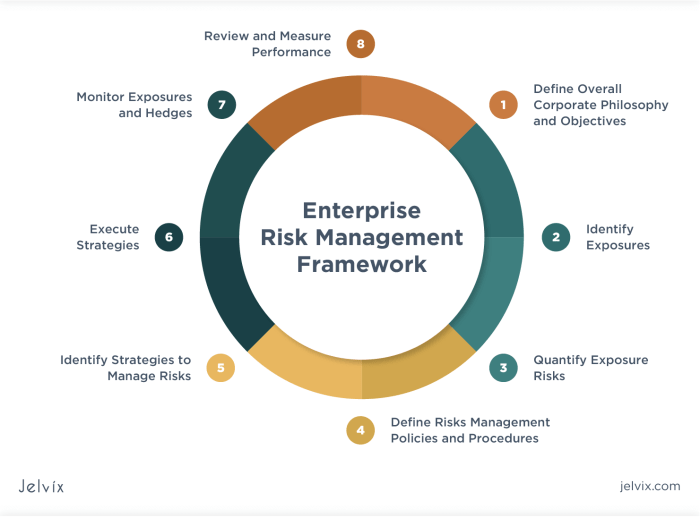
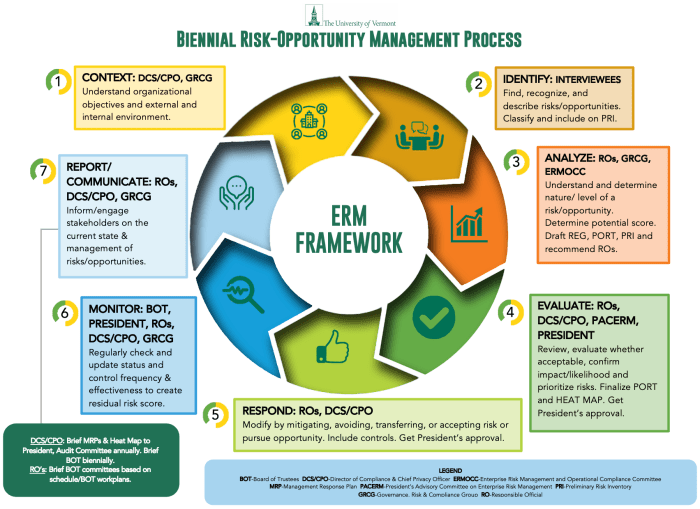
Key Components of ERM Framework
- Risk Governance: Establishing a clear governance structure to oversee the ERM process and ensure accountability.
- Risk Identification: Systematically identifying and categorizing risks that may affect the organization.
- Risk Assessment: Evaluating the likelihood and impact of identified risks to prioritize them for mitigation.
- Risk Treatment: Developing and implementing strategies to manage and control risks effectively.
- Risk Monitoring: Continuously monitoring and reviewing risks to ensure the ERM framework remains relevant and up-to-date.
Risk Assessment in ERM
Risk assessment plays a crucial role in Enterprise Risk Management (ERM) by helping organizations identify, analyze, and evaluate potential risks that could impact their objectives. This process allows companies to make informed decisions and develop strategies to mitigate or manage these risks effectively.
Process of Identifying, Analyzing, and Evaluating Risks
Risk assessment involves the following key steps:
- Identification: This step involves identifying all potential risks that could affect the organization’s goals and objectives. It includes internal and external factors that may pose a threat.
- Analysis: Once risks are identified, they are analyzed to understand their potential impact on the organization. This includes assessing the likelihood of the risk occurring and the severity of its consequences.
- Evaluation: Risks are then evaluated based on their significance and prioritized according to the level of threat they pose. This step helps organizations focus on addressing the most critical risks first.
Different Methods Used in Risk Assessment within ERM
There are various methods used in risk assessment within ERM, including:
- Quantitative Risk Analysis: This method involves assigning numerical values to risks to measure their potential impact and likelihood of occurrence. It helps in calculating the overall risk exposure of the organization.
- Qualitative Risk Analysis: Qualitative methods focus on assessing risks based on subjective criteria such as expert judgment, experience, and historical data. It helps in prioritizing risks based on their qualitative characteristics.
- Scenario Analysis: This method involves creating hypothetical scenarios to assess how different risks could impact the organization. It helps in understanding the potential outcomes of various risk events.
- Control Self-Assessment: This method involves engaging employees at all levels of the organization to identify and assess risks within their areas of responsibility. It promotes a culture of risk awareness and accountability.
Risk Management Strategies in ERM
Effective risk management is crucial for the success of any organization. In Enterprise Risk Management (ERM), various strategies are employed to identify, assess, and mitigate risks that could impact the business.
Risk Mitigation in ERM
Risk mitigation is the process of reducing the probability or impact of a risk. In ERM, this is achieved by implementing strategies to lessen the likelihood of risk occurrence or minimize its potential consequences. This proactive approach helps organizations be better prepared to handle unforeseen events.
- Implementing robust internal controls to prevent risks from materializing.
- Diversifying investments to spread risk across different assets.
- Developing contingency plans to address risks if they do occur.
- Regularly reviewing and updating risk management processes to adapt to changing circumstances.
Risk Transfer in ERM
Risk transfer involves shifting the financial burden of a risk to another party, typically through insurance or outsourcing. In ERM, organizations can transfer certain risks to external entities to reduce their exposure and protect their assets.
- Purchasing insurance policies to cover potential losses from specific risks.
- Entering into contracts that allocate risk to third parties in case of certain events.
- Outsourcing certain functions or services to specialized providers who assume associated risks.
Risk Avoidance in ERM
Risk avoidance is the strategy of completely steering clear of activities or situations that could lead to potential risks. While not always feasible, in some cases, avoiding certain risks altogether may be the best course of action to protect the organization.
- Choosing not to engage in high-risk ventures that could jeopardize the business.
- Exiting markets or discontinuing products/services with excessive risk exposure.
- Strictly adhering to regulatory compliance to avoid legal and compliance risks.
Risk Tolerance in ERM
Risk tolerance plays a crucial role in Enterprise Risk Management (ERM) as it helps organizations determine the acceptable level of risk they are willing to take in pursuit of their objectives. It is a measure of the amount of risk that an organization is willing to accept or retain in order to achieve its goals.
Significance of Risk Tolerance in ERM
Determining risk tolerance levels is essential for organizations to align their risk management strategies with their overall objectives. By establishing risk tolerance, companies can make informed decisions regarding risk-taking activities and ensure that they do not exceed their capacity to handle risks effectively.
- Risk tolerance guides organizations in setting risk management priorities and allocating resources efficiently.
- It helps in establishing a risk-aware culture within the organization and promotes better decision-making processes.
- By defining risk tolerance levels, companies can communicate their risk appetite clearly to stakeholders and regulators.
Factors Influencing Risk Tolerance within ERM
Several factors contribute to determining an organization’s risk tolerance levels within the ERM framework. These factors can vary based on the industry, size of the organization, regulatory environment, and overall risk management maturity.
- Organizational Objectives: The alignment of risk tolerance with strategic objectives is crucial in determining the level of risk a company is willing to accept.
- Industry Standards and Regulations: Compliance requirements and industry best practices can influence an organization’s risk tolerance levels.
- Financial Stability: The financial health of the organization and its ability to withstand potential losses impact risk tolerance decisions.
- Risk Appetite of Key Stakeholders: The risk appetite of key stakeholders, including board members, executives, and investors, can shape the organization’s risk tolerance.
In conclusion, Enterprise Risk Management equips organizations with the tools and strategies needed to proactively address uncertainties, safeguard assets, and seize opportunities for growth. By fostering a culture of risk awareness and strategic decision-making, ERM paves the way for sustainable success amidst a dynamic business landscape.
Frequently Asked Questions
How does ERM benefit organizations?
ERM enhances organizational resilience by identifying and managing risks effectively, ensuring long-term security and success.
What are the key components of ERM framework?
The ERM framework includes risk identification, risk assessment, risk response, and ongoing monitoring and reporting.
How do organizations determine their risk tolerance levels?
Organizations assess their risk tolerance based on factors like business objectives, industry regulations, and financial capacity.


