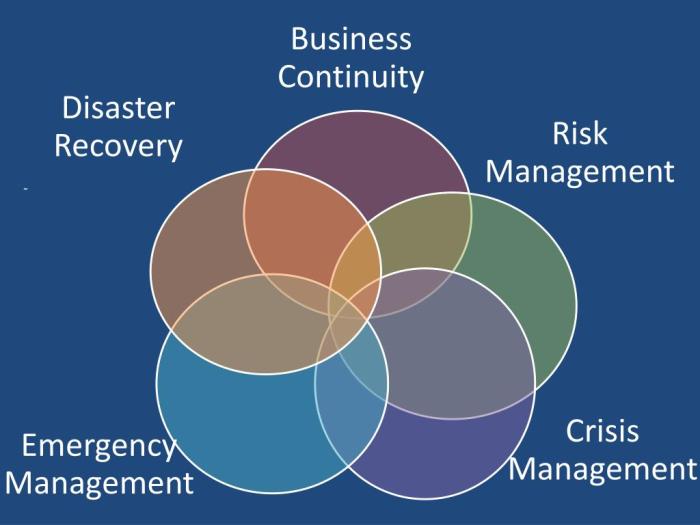
With Business continuity risk management at the forefront, this paragraph opens a window to an amazing start and intrigue, inviting readers to embark on a storytelling journey filled with unexpected twists and insights. In today’s fast-paced business environment, ensuring the continuity of operations is crucial in mitigating risks and maintaining resilience. Let’s delve into the world of Business continuity risk management to understand how organizations navigate uncertainties and uphold their stability.
Introduction to Business Continuity Risk Management
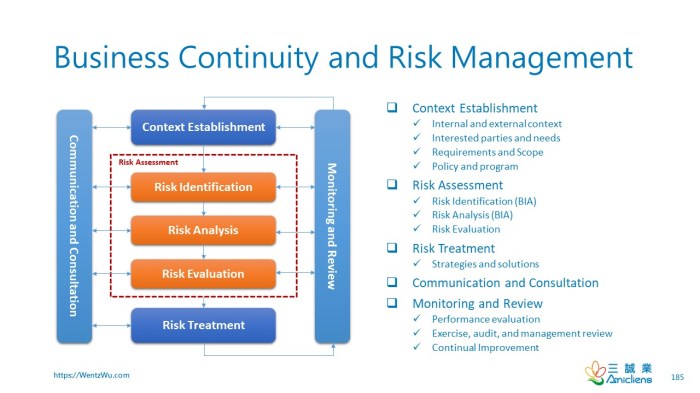
Business Continuity Risk Management refers to the process of identifying, assessing, and prioritizing potential risks that could disrupt business operations. It involves developing strategies and plans to mitigate these risks and ensure the organization can continue functioning in the face of unexpected events.
Business continuity planning is essential for organizations to prepare for unforeseen events such as natural disasters, cyber-attacks, or economic downturns. By having a comprehensive risk management strategy in place, businesses can minimize the impact of disruptions and maintain their ability to deliver products or services to customers.
The Relationship Between Risk Management and Business Continuity
Risk management and business continuity are closely intertwined, with risk management serving as the foundation for effective business continuity planning. Risk management involves identifying potential threats, assessing their likelihood and impact, and implementing measures to mitigate or transfer the risks.
Business continuity planning, on the other hand, focuses on developing strategies to ensure the organization can continue operating in the event of a disruption. By integrating risk management principles into the business continuity planning process, organizations can identify critical functions, prioritize resources, and establish protocols to respond effectively to crises.
Risk Assessment in Business Continuity
Risk assessment is a crucial process in business continuity management that involves identifying, analyzing, and evaluating potential risks that could impact an organization’s operations. By conducting a thorough risk assessment, businesses can proactively plan for and mitigate potential threats, ensuring their ability to continue essential functions during times of crisis.
Process of Conducting Risk Assessments
Risk assessments typically involve the following steps:
- Identifying potential risks: This involves identifying internal and external threats that could disrupt business operations, such as natural disasters, cyberattacks, or supply chain disruptions.
- Analyzing the likelihood and impact of each risk: Businesses need to assess the likelihood of each risk occurring and the potential impact it could have on their operations.
- Evaluating current risk mitigation measures: Organizations should review existing risk mitigation strategies and determine if they are sufficient or if additional measures are needed.
- Developing risk response plans: Based on the findings of the risk assessment, businesses can develop detailed response plans to address each identified risk effectively.
Significance of Identifying Potential Risks
Identifying potential risks is essential for several reasons:
- Preparedness: By identifying risks in advance, businesses can prepare and implement strategies to minimize the impact of these risks on their operations.
- Resource allocation: Understanding potential risks allows organizations to allocate resources effectively to mitigate these risks and ensure business continuity.
- Reputation management: Being aware of potential risks helps businesses protect their reputation by responding quickly and effectively to crises.
Examples of Common Risks in Business Continuity
- Natural disasters such as floods, earthquakes, or hurricanes
- Cybersecurity threats like data breaches or ransomware attacks
- Supply chain disruptions due to vendor issues or economic factors
- Employee issues such as key personnel leaving the organization unexpectedly
Risk Management Strategies
Risk management is an essential component of business continuity planning, helping organizations identify, assess, and mitigate potential risks that could impact their operations. By implementing effective risk management strategies, businesses can enhance their resilience and ability to respond to disruptions in a proactive manner.
Risk Identification and Assessment
Risk identification involves identifying potential threats that could adversely affect the organization, such as natural disasters, cyber attacks, or supply chain disruptions. Once risks are identified, they need to be assessed to determine their potential impact and likelihood of occurrence. This step helps prioritize risks based on their significance and allows organizations to allocate resources effectively.
- Conducting thorough risk assessments regularly to identify and prioritize potential risks.
- Utilizing risk assessment tools and methodologies to quantify and evaluate risks.
- Involving key stakeholders in the risk identification and assessment process to gain diverse perspectives.
- Documenting risk assessment findings and updating them as new risks emerge or existing risks evolve.
Risk Mitigation Strategies
Risk mitigation involves developing strategies to reduce the impact of identified risks and increase the organization’s ability to withstand disruptions. This proactive approach helps minimize the likelihood of risks materializing and mitigates their consequences if they do occur.
- Implementing preventive measures to reduce the likelihood of risks, such as redundancies, backups, and security controls.
- Developing contingency plans to respond effectively to potential risks and minimize their impact on operations.
- Establishing partnerships with external entities to enhance resilience and access additional resources during emergencies.
- Regularly testing and updating risk mitigation strategies to ensure their effectiveness and relevance.
Best Practices for Managing Risks
Effective risk management requires the implementation of best practices to ensure comprehensive coverage and proactive response to potential threats. By following these best practices, organizations can enhance their risk management capabilities and improve their overall resilience.
- Establishing a risk management framework that Artikels roles, responsibilities, and processes for managing risks.
- Integrating risk management into decision-making processes to consider risks when planning and executing strategies.
- Monitoring and reviewing risk management activities regularly to identify gaps and areas for improvement.
- Providing training and awareness programs to educate employees about risk management practices and their role in mitigating risks.
Risk Tolerance in Business Continuity
Risk tolerance refers to the level of risk that an organization is willing to accept or take on in pursuit of its objectives. It plays a crucial role in risk management by helping organizations determine the acceptable level of risk exposure they are willing to tolerate. This allows them to make informed decisions regarding risk mitigation strategies and resource allocation.
Role of Risk Tolerance in Decision-Making
Risk tolerance influences decision-making in business continuity by providing a framework for evaluating and prioritizing risks. Organizations with a high risk tolerance may be more willing to take on higher levels of risk in pursuit of greater rewards, while those with a lower risk tolerance may prioritize risk avoidance or mitigation strategies. Understanding the organization’s risk tolerance level helps in aligning business continuity plans with overall organizational goals and objectives.
Setting Risk Tolerance Levels
- Organizations can set risk tolerance levels based on factors such as industry regulations, stakeholder expectations, financial considerations, and the organization’s risk appetite.
- Risk tolerance levels can be defined quantitatively, such as in terms of financial impact or probability of occurrence, or qualitatively, based on the organization’s risk culture and values.
- Examples of setting risk tolerance levels include defining acceptable downtime for critical business functions, determining the maximum acceptable financial loss in the event of a disruption, and establishing thresholds for key performance indicators related to business continuity.
As we conclude our exploration of Business continuity risk management, it becomes evident that proactive risk planning is the cornerstone of organizational sustainability. By implementing effective strategies and embracing a culture of preparedness, businesses can thrive amidst challenges and emerge stronger. Remember, in the realm of risk management, foresight is the key to success.
Essential FAQs
What is the primary goal of business continuity risk management?
The primary goal is to ensure that a business can continue its essential functions during and after a disaster or any disruptive event.
How does risk tolerance impact decision-making in business continuity?
Risk tolerance influences decisions by determining the level of risk exposure that an organization is willing to accept in pursuit of its objectives.
What are some common risks addressed in business continuity planning?
Common risks include natural disasters, cyber-attacks, supply chain disruptions, and operational failures.


