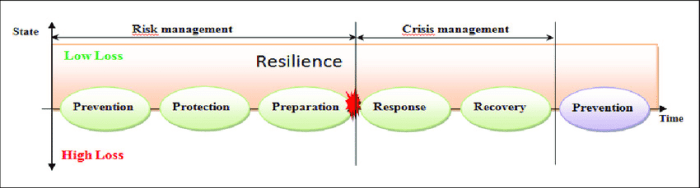
Exploring the realm of crisis management and risk, this introduction sets the stage for a deep dive into the complexities and strategies essential for businesses to thrive amidst uncertainties.
As we unravel the nuances of crisis management and risk assessment, we uncover the pivotal role they play in shaping organizational resilience and success.
Crisis Management
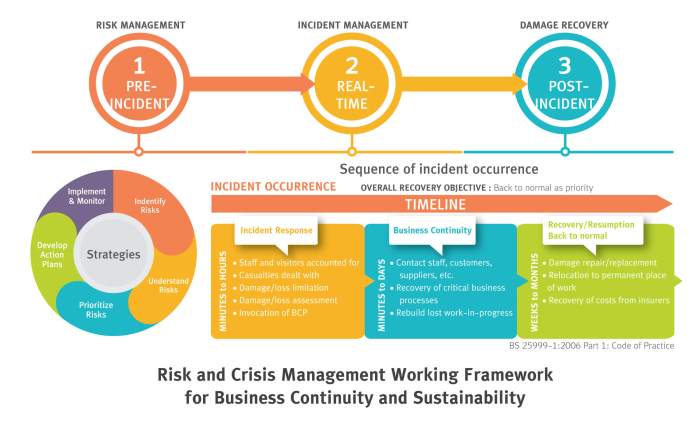
Having a crisis management plan in place is crucial for organizations to effectively navigate unexpected challenges and minimize potential damage. It allows businesses to respond swiftly and efficiently, safeguarding their reputation and operations.
Common Elements of an Effective Crisis Management Plan
- Establishing a crisis management team with clear roles and responsibilities.
- Developing a communication strategy to ensure timely and accurate information dissemination.
- Conducting regular training and simulation exercises to prepare for various crisis scenarios.
- Creating a detailed response protocol outlining steps to be taken during a crisis.
Successful Crisis Management Strategies in the Corporate World
- Johnson & Johnson’s handling of the Tylenol poisoning crisis in 1982, where they recalled products, cooperated with authorities, and implemented tamper-proof packaging.
- Starbucks’ response to racial bias incidents by conducting company-wide training and publicly acknowledging the issue.
- United Airlines’ quick and transparent communication following the violent removal of a passenger from a flight, leading to policy changes and compensation for affected individuals.
The Role of Communication in Crisis Management
Effective communication is key in crisis management as it helps maintain transparency, build trust, and manage stakeholders’ expectations. Clear and consistent messaging can mitigate confusion, reduce misinformation, and demonstrate organizational accountability.
Risk Assessment
Risk assessment is a crucial process in organizational decision-making as it helps identify, evaluate, and prioritize potential risks that could affect the achievement of objectives. By conducting risk assessments, organizations can proactively manage and mitigate risks to minimize potential negative impacts on operations, finances, reputation, and overall success.
Process of Conducting a Risk Assessment
- Identify risks: Begin by identifying potential risks that could impact the organization’s goals and objectives.
- Assess risks: Evaluate the likelihood and impact of each identified risk to determine its significance.
- Prioritize risks: Determine which risks require immediate attention and mitigation efforts based on their severity.
- Develop risk management strategies: Create action plans to address and mitigate identified risks effectively.
- Implement risk management plans: Put the strategies into action and monitor their effectiveness in managing risks.
- Review and update: Regularly review and update the risk assessment process to adapt to changing circumstances and new risks.
Types of Risks Organizations Face
- Financial risks: Such as market fluctuations, credit risks, or financial mismanagement.
- Operational risks: Including system failures, supply chain disruptions, or human errors.
- Reputational risks: Threats to an organization’s public image, brand, or reputation.
- Compliance risks: Legal and regulatory issues that could lead to penalties or sanctions.
- Cybersecurity risks: Data breaches, hacking attacks, or information security vulnerabilities.
Benefits of Performing Regular Risk Assessments
- Early identification of potential threats and vulnerabilities.
- Improved decision-making by considering risks in strategic planning.
- Enhanced operational efficiency by addressing risks proactively.
- Protection of assets and resources from potential losses.
- Increased stakeholder confidence and trust in the organization’s risk management practices.
Risk Management
Risk management is the process of identifying, assessing, and prioritizing risks in order to minimize, monitor, and control the impact of unforeseen events on an organization. It is essential for businesses to have a robust risk management framework in place to protect their assets, reputation, and overall operations.
Different Risk Management Strategies
- Enterprise Risk Management (ERM): ERM involves a holistic approach to risk management, considering risks across all levels of an organization.
- Risk Avoidance: This strategy involves eliminating activities that carry high risks or potential harm to the organization.
- Risk Mitigation: Implementing measures to reduce the likelihood or impact of identified risks.
- Risk Transfer: Transferring the financial impact of risks to a third party, such as insurance companies.
Role of Risk Management in Ensuring Business Continuity
Risk management plays a crucial role in ensuring business continuity by identifying potential threats and vulnerabilities that could disrupt operations. By proactively managing risks, organizations can develop contingency plans and response strategies to minimize the impact of crises and maintain essential functions.
Examples of Successful Risk Management Practices
One notable example is the airline industry, which implements rigorous safety protocols and risk management strategies to ensure passenger safety and operational efficiency.
Another example is the financial sector, where institutions conduct thorough risk assessments to safeguard against market fluctuations and economic downturns.
Risk Tolerance
Risk tolerance refers to the level of risk that an organization is willing to accept in pursuit of its objectives. This can vary significantly among different organizations based on various factors.
Variability of Risk Tolerance
- Organizational Culture: Companies with a more risk-averse culture may have lower risk tolerance compared to those with a culture that encourages innovation and bold decision-making.
- Industry Sector: Industries with higher regulatory requirements or safety standards may have lower risk tolerance levels due to the potential consequences of non-compliance.
- Financial Position: Organizations with strong financial resources may have higher risk tolerance as they can better absorb potential losses.
Relationship with Decision-making
- Risk tolerance directly impacts the decision-making process within an organization. A higher risk tolerance may lead to more aggressive strategies, while a lower risk tolerance may result in more conservative approaches.
- Understanding the risk tolerance of key stakeholders is crucial for aligning decision-making processes with organizational objectives.
Determining Optimal Risk Tolerance Levels
- Conducting a comprehensive risk assessment to identify potential risks and their potential impact on the organization.
- Engaging with stakeholders to understand their risk preferences and aligning them with the organization’s risk appetite.
- Regularly reviewing and adjusting risk tolerance levels based on changes in the business environment and strategic objectives.
In conclusion, navigating the intricacies of crisis management and risk proves to be a cornerstone of sustainable business practices, emphasizing the need for proactive planning and adaptable strategies in today’s dynamic landscape.
Query Resolution
What is the importance of having a crisis management plan in place?
Having a crisis management plan ensures that organizations are prepared to effectively respond to unexpected events, minimizing potential damage.
How can organizations determine their optimal risk tolerance levels?
Organizations can determine their optimal risk tolerance levels by conducting thorough assessments that consider their objectives, resources, and industry standards.


